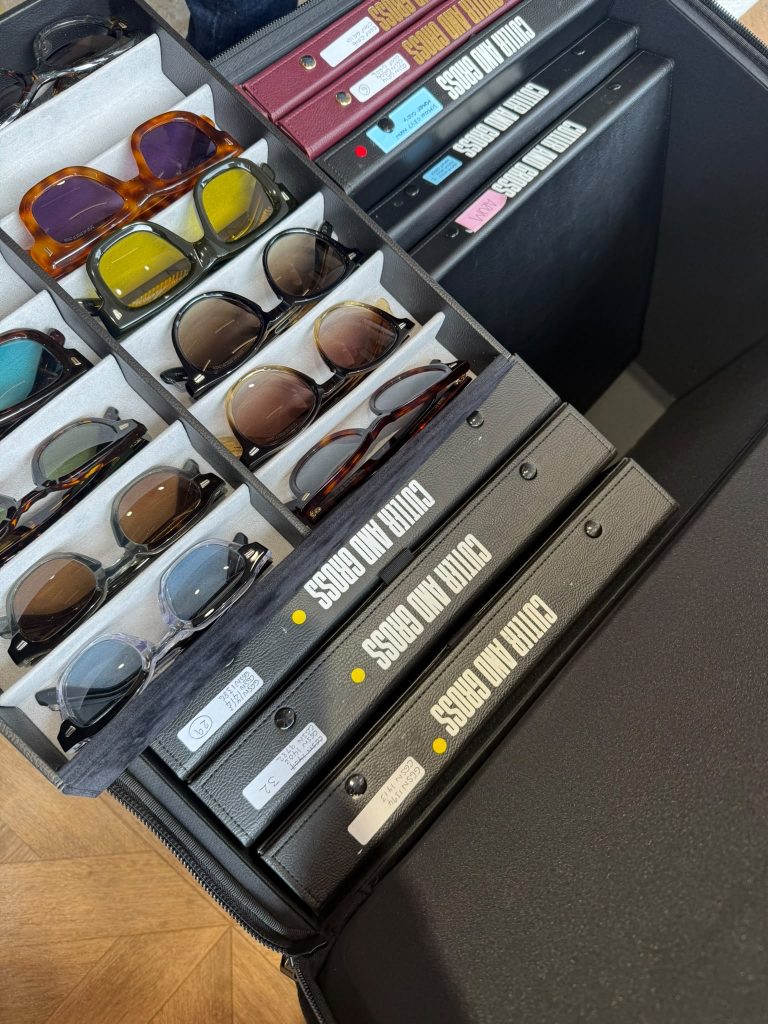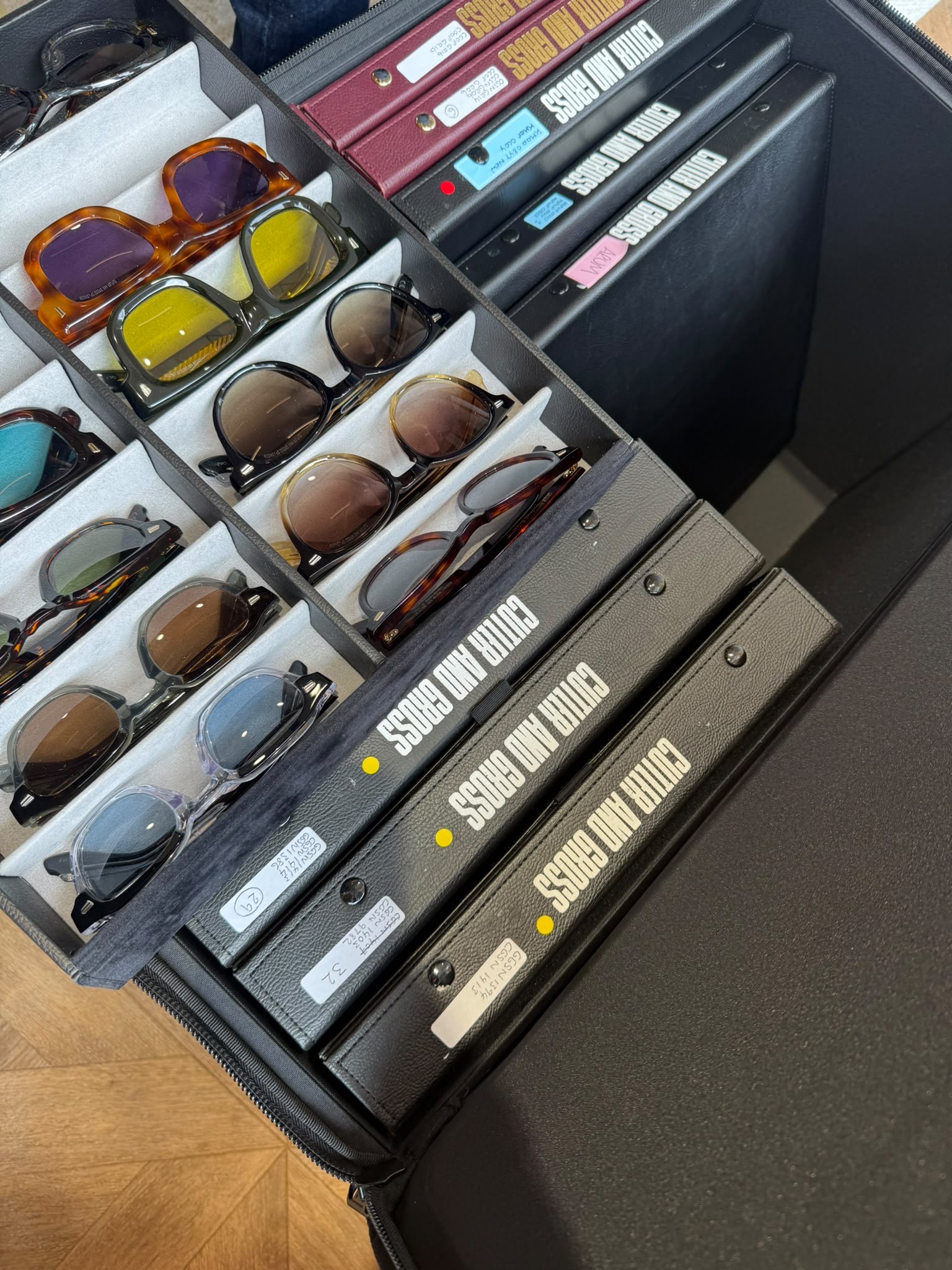
Edwards & Walker Opticians in Doncaster are proud to be exclusive stockists of the legendary Cutler and Gross frame collection!
If you haven’t come across the name before, here’s a little background on who they are, where they’ve come from, and why we think their frames are worth your attention.
Who are Cutler and Gross?

Cutler and Gross was founded in 1969 by two opticians, Graham Cutler and Tony Gross.
The pair met while training to become ophthalmic opticians at Northampton College in the early 1960s, and beyond their shared professional training, they discovered a mutual interest in fashion, art and design.
That combination became the foundation of the brand.
In 1971, they opened their first store at 16 Knightsbridge Green in London. It started as a small, bespoke service, and word of mouth did the rest.
Before long, it had become a go-to for artists, musicians, writers and others who wanted their glasses to be more than just a means of seeing clearly.
What made the partnership work was the contrast between the two men.
Tony Gross brought flamboyance and flair, while Graham Cutler was the more meticulous, detail-focused of the two.
As Graham himself put it, his approach to design was “practical, functional, then look good, in that order.”
Tony, meanwhile, believed that people who need glasses shouldn’t have to feel separated from glamour.
Between the two of them, they built a brand that took both function and character seriously, and that balance still shapes the collections today.
Born in London. Handmade in Italy and Japan. Sold Doncaster.
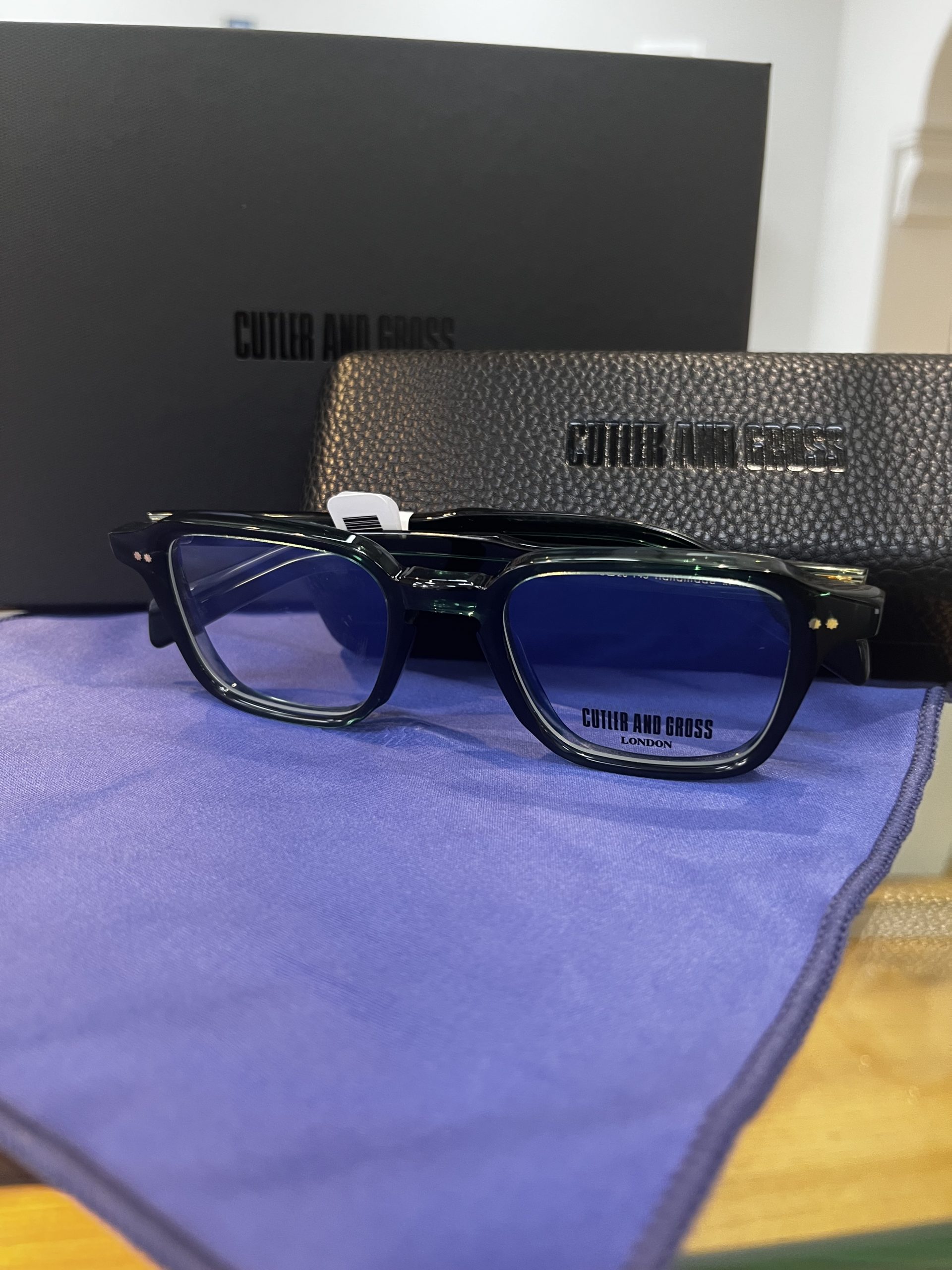
Cutler and Gross frames are made in Italy and Japan, but it’s worth understanding what that actually means in practice, because it’s more than a label.
The acetate frames come from workshops in the Dolomites in Italy.
Acetate itself is made from cotton, and each sheet has its own depth and colour, meaning no two frames are ever quite identical.
Making a single frame involves months of work, cutting, shaping, tumbling and polishing, carried out by hand at each stage.
The titanium frames come from Sabae, a small city in Japan with a long-standing reputation for eyewear craftsmanship, and where the first titanium frames were pioneered back in the 1980s.
Titanium is lightweight, durable and flexible, which makes it a genuinely practical choice for frames that need to be worn every day, not just an aesthetic one.
Producing it well requires precision welding and hand-rolling of the rim wire, done by artisans who’ve spent years developing the skill.
None of this is rushed. It’s the reason each pair carries a certain weight and presence that’s hard to replicate with faster production methods.
The details that set Cutler and Gross apart
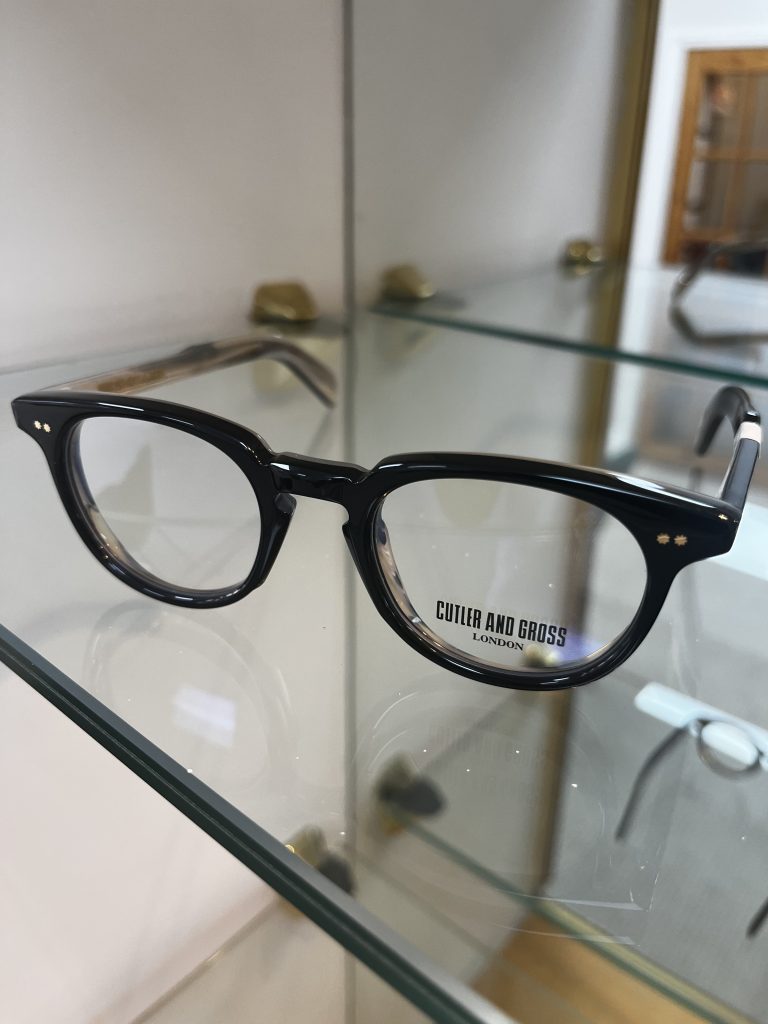
A few design features turn up consistently across Cutler and Gross collections, and they’re worth knowing about if you’re trying on a pair for the first time.
The oyster pin.
Cutler and Gross use pinned hinges, secured with an exposed pin, which is the only decoration they allow on the frame. It was originally sourced as a vintage Japanese pin, first appearing on a frame in 2004, and brought back in 2021. It’s now one of the more recognisable details across their current collections.
The eight-point star.
A decorative and structural detail that evolved from a six-point star rivet used back in the 1980s. It’s a small example of how the brand tends to revisit and refine its own archive rather than starting from scratch each time.
The logo inlay.
Rather than printing their name on the outside of the frame, Cutler and Gross laser-cut a gold foil logo and place it by hand inside the right temple. It’s a quieter way of marking a genuine pair, and one that only shows up if you know to look for it.
Frame numbering.
Every frame has been numbered since the very beginning. Neither founder wanted their designs pinned to gender or given overly masculine or feminine names, so numbering became the way to track each edition instead. It also means every frame can be dated and placed in its design context.
Why we think Doncaster will love Cutler and Gross
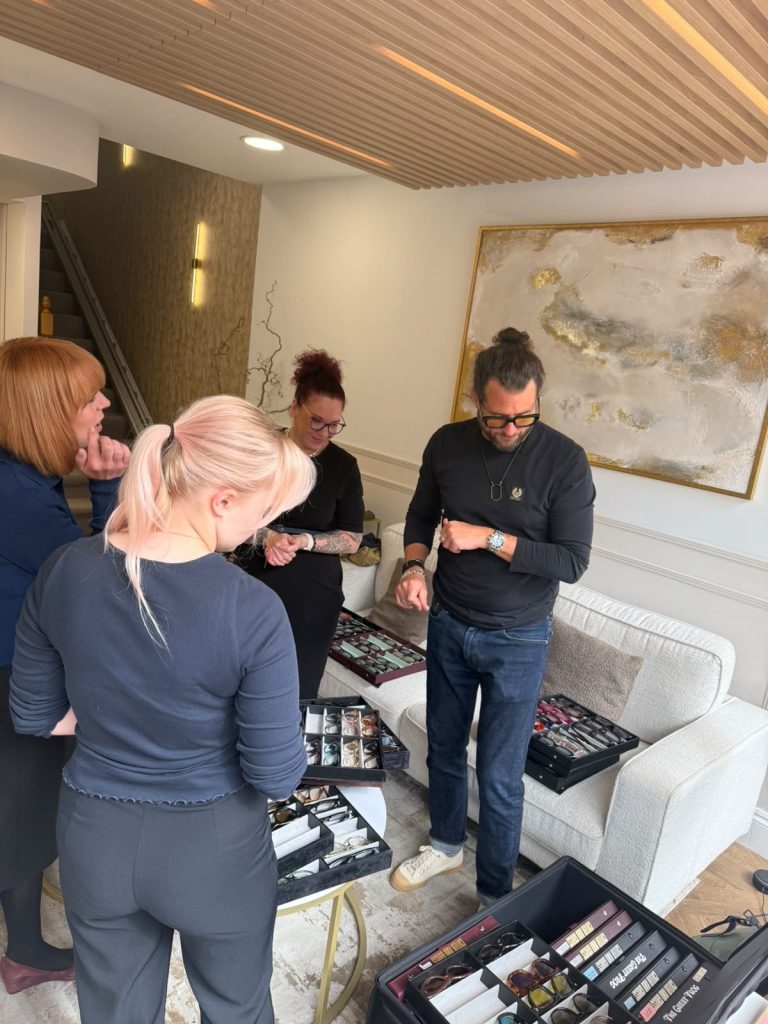
We’ve brought Cutler and Gross to Doncaster because we think our patients deserve to know what’s out there beyond the norm, and really get to experience fine craftsmanship.
Good eyewear should hold up under daily wear and still feel considered when you put it on.
These are frames made by people who’ve spent decades refining a small number of details rather than chasing trends, and it shows in how they sit, how they wear in over time, and the general feel of the acetate or titanium in your hands.
If you’d like to try a pair, we’d love for you to pop into the practice and have a look.
We’re always happy to talk through the collection and help you find a frame that suits you best.