Glasses frame prices are influenced by a range of factors, including materials, craftsmanship and brand, rather than quality alone. The right choice depends on your prescription, how often you’ll wear them and what matters most to you.
If you’ve ever browsed glasses frames, you’ve probably noticed that prices can vary quite significantly. Two frames may look almost identical at first glance, but one costs £80 while another costs £400 or more.
So, what are you actually paying for?
The answer isn’t always straightforward. The price of a pair of glasses can be influenced by many factors, including the materials they’re made from, how they’re manufactured, the design, where they’re produced and in some cases the name on the side of the frame.
A higher price doesn’t automatically mean a frame is better suited to you, just as a lower price doesn’t necessarily mean it’s poor quality. The right choice depends on how you’ll wear your glasses, your prescription, your style and your budget.
As independent opticians, we fit and adjust glasses every day. Over time, we’ve seen how different materials, designs and manufacturing methods perform in real life. Here’s what actually determines the cost of a pair of glasses and what to look for before you buy.
Does the material a glasses frame is made from affect the price?
Different frame materials have different manufacturing processes and finishes, all of which can influence the final cost.
Plastic
Many frames, particularly at lower price points, are made using injection-moulded plastics. These can be lightweight, practical and cost effective to manufacture, making them a popular choice for everyday wear and for those shopping within a budget.
Acetate
Acetate is one of the most popular materials used in premium eyewear.
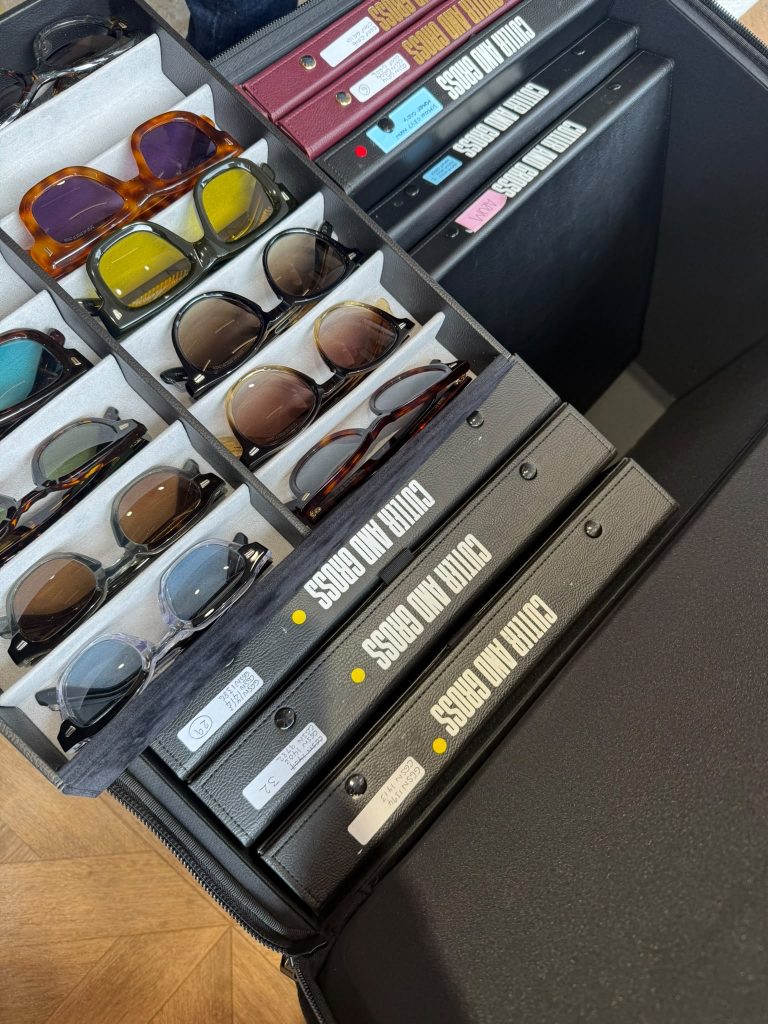
Whether it’s a statement frame from Gucci, or handcrafted frames from Cutler and Gross, acetate allows designers to create colours, patterns and finishes that are difficult to achieve with standard plastics.
Metal
Metal frames are available at a wide range of price points. Materials such as stainless steel and titanium have different qualities, with some offering increased flexibility or reduced overall weight.
Each material has its own advantages, and the best option depends on what matters most to you. Some people prioritise lightweight comfort, others prefer bold styling, while some simply want a durable everyday frame.
The material is just one factor among many. Design, construction, manufacturing quality and fit all contribute to the overall value of a frame.
Are expensive glasses actually made differently?
Sometimes, yes.
Many more affordable frames are manufactured using large scale production methods. These methods are designed to produce large quantities of frames efficiently and consistently, helping to keep costs down.
At the higher end of the market, many premium frames involve considerably more manual craftsmanship.
Depending on the manufacturer, skilled frame makers spend time shaping acetate by hand, polishing edges, assembling hinges and carrying out multiple quality inspections before a frame leaves the factory.
Many of the world’s leading eyewear manufacturers combine both approaches. Precision machinery is used where accuracy is essential, while experienced craftspeople complete the finishing touches by hand.
This doesn’t automatically make one approach ‘better’ than the other. Quite simply, if a frame takes longer to make and involves more skilled craftsmanship throughout the process, it is likely to cost more.
Does where glasses are made make a difference?
At Edwards & Walker, our frame collections come from manufacturers across several countries, each with their own areas of expertise.
Something we’re often asked is whether glasses made in Italy are automatically better than glasses made elsewhere. The answer is no, but where a frame is made can tell you something about the manufacturing techniques and expertise behind it.
However, the country of manufacture shouldn’t be viewed as a guarantee of quality.
Instead, it often reflects differences in manufacturing expertise, labour costs, production methods and available materials. Excellent frames can be produced in many parts of the world.
Are designer glasses more expensive just because of the name?
The simple answer is yes, branding can influence price, but there are usually several factors involved.
There are several different types of eyewear brands, and understanding the difference can help explain why prices vary.
Fashion brands
Many well known fashion houses also release frame collections. Part of the price reflects the value of the brand itself, alongside the design and global recognition associated with it.
Eyewear specialists
Some companies focus almost exclusively on designing and manufacturing eyewear. These brands often invest heavily in frame engineering, materials and manufacturing processes.
Independent designers
Smaller independent brands often produce frames in much lower quantities than global fashion labels. Limited production runs, specialist materials and manual manufacturing can all contribute to higher prices.
Large manufacturers
Some international eyewear groups manufacture frames for multiple brands, allowing them to produce eyewear efficiently on a larger scale.
Ultimately, branding is one factor among many. Sometimes you’re paying for exclusivity and design heritage, while in other cases you’re paying for genuinely different materials or craftsmanship.
Does a more expensive frame last longer?
It can, but there are no guarantees.
Longevity depends on several factors, including:
- → The materials used
- → Hinge quality
- → Construction methods
- → Daily wear
- → How well the glasses are looked after
At Edwards and Walker, we regularly adjust and repair glasses that have been worn for many years. Some premium frames continue to hold their shape exceptionally well after repeated adjustments, while we’ve also seen more affordable frames give patients years of reliable wear. In our experience, how well someone looks after their glasses is often just as important as the original purchase price.
Does a more expensive frame fit better?
The perfect fit depends on the design of the frame and the person wearing it, not the price.
When dispensing glasses, we consider factors like:
- → Bridge fit
- → Frame width
- → Weight
- → Face shape
- → Overall comfort
Even the most expensive frame won’t feel comfortable if it doesn’t fit properly.
That’s why professional fitting and adjustment are such an important part of choosing glasses. Professional fitting and adjustment can therefore be an important part of choosing glasses, helping ensure the frame sits comfortably and securely.
We often see people come into practice convinced they want a particular style, then leave with something they’d never considered after trying several different options.
Can the frame you choose affect how well your lenses work?
Absolutely.
The frame and lenses work together, which means choosing a frame isn’t simply about appearance.
Depending on a prescription, certain frame shapes and sizes may produce better results than others.For example, someone with a stronger prescription may find that certain frame sizes or shapes work better for managing lens thickness and weight.
When helping patients choose glasses, we always consider both the style they love and whether that frame is suitable for their prescription.
Sometimes the most expensive frame isn’t the best optical option and sometimes a lower priced frame performs better.
Are lower priced glasses frames bad?
Lower priced frames can be an excellent choice in many situations.
For example:
- → Reading glasses
- → A spare pair
- → Occasional use
- → Children’s glasses that may need replacing as they grow
- → Anyone working within a particular budget
There can be some differences at lower price points, such as fewer colour options or simpler construction, but that doesn’t mean they won’t provide comfortable and reliable everyday wear.
The most important thing is choosing a frame that suits your needs.
So, are expensive glasses frames worth the money?
There isn’t a simple yes or no answer.
Instead, it’s worth asking yourself a few questions:
- How often will I wear them?
Glasses worn all day, every day may justify investing more in comfort and durability than a pair used occasionally.
- How important are they to my appearance?
Glasses are one of the few accessories you wear every day, so style matters to many people.
- What does my prescription require?
Certain prescriptions work better with particular frame designs.
- How long do I hope they’ll last?
Think about how long you expect to wear them when deciding how much to invest.
- What fits comfortably within my budget?
The best value glasses aren’t necessarily the cheapest pair or the most expensive. They’re the ones that provide the right combination of comfort, fit, appearance, durability and visual performance for the person wearing them.
What should you look for when choosing glasses frames?
If you’re comparing different frames, keep these points in mind:
- → Consider the materials and how they’ll affect comfort and durability.
- → Don’t assume the most expensive option is automatically the best.
- → Choose a frame that works well with your prescription as well as your style.
- → Think about how often you’ll wear your glasses.
When helping patients choose new glasses, these are exactly the factors we consider. Every person has different priorities, which is why the best frame is rarely defined by its price tag alone.
ps. Still unsure? Let us take care of you. Book an appointment with us today.